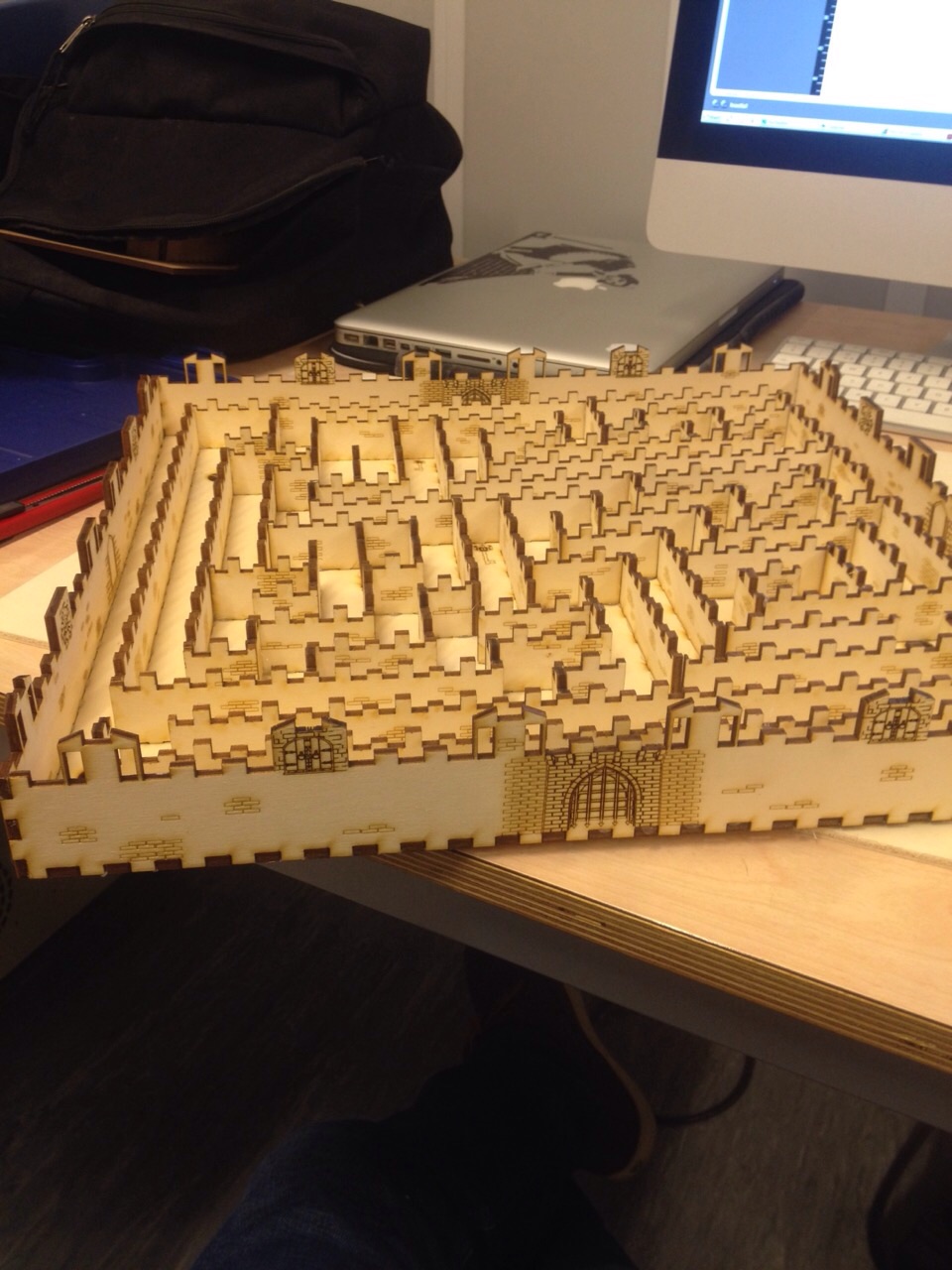
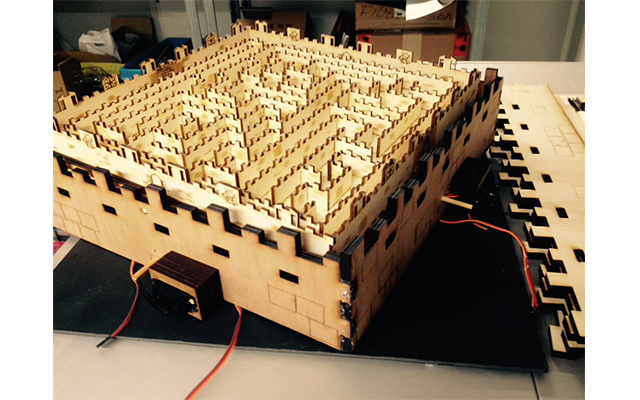
An old labyrinth game, which child hasn’t had one or played with it?
After I found my old one tucked away in a drawer decided to build a 2.0 version of the game
For those who don’t recognise the game, the purpose of the game is to get your ball to the finish of the labyrinth by moving the X and Y-axel without losing your ball in the little holes.
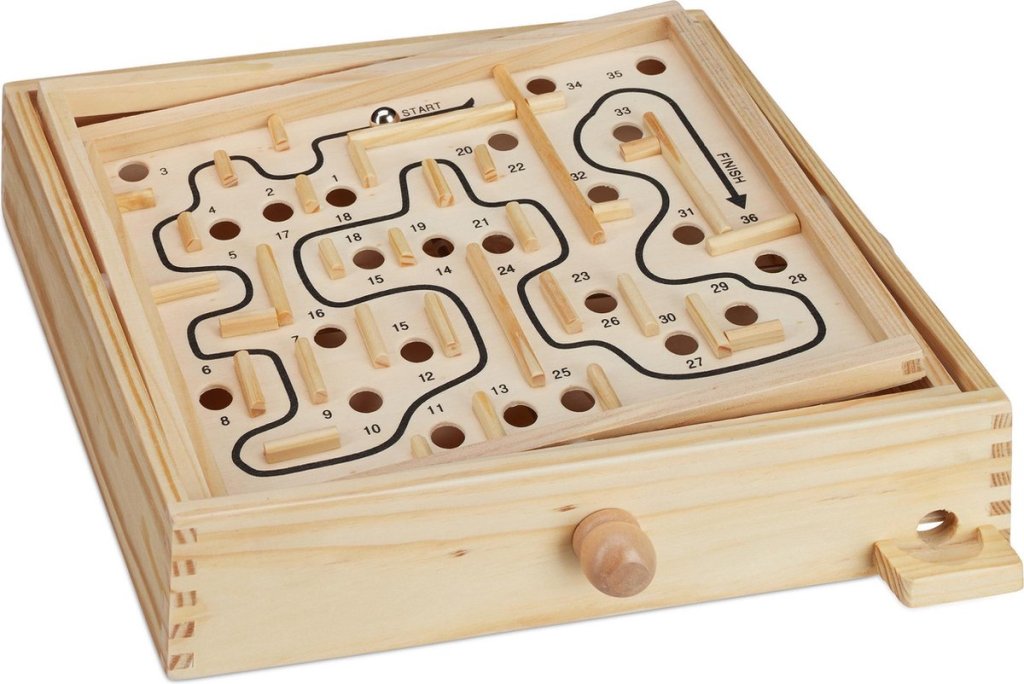
Taking the original version as a starting point, I designed and built a prototype labyrinth game with “secret hidden keys” which unlock doors/ levels. Instead of the physical X and Y-axel which you had to turn between your fingers I programmed a playstation joystick to control the board digitally.
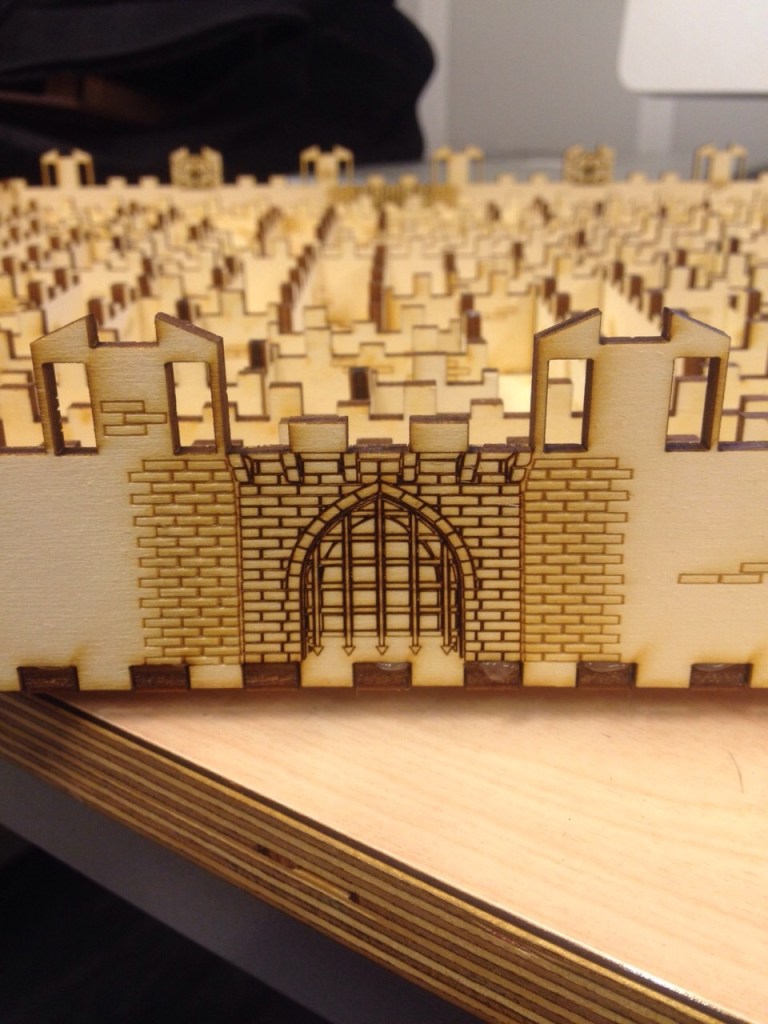
The game
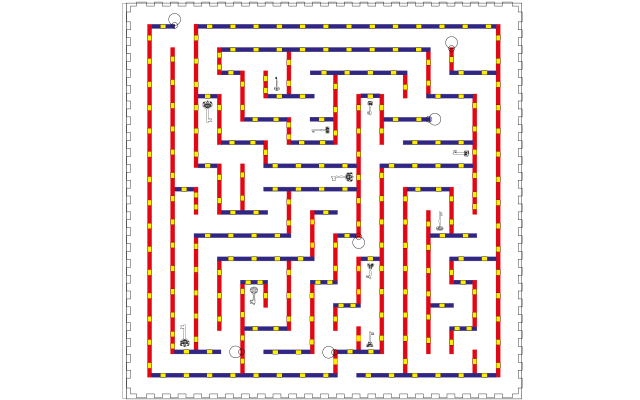
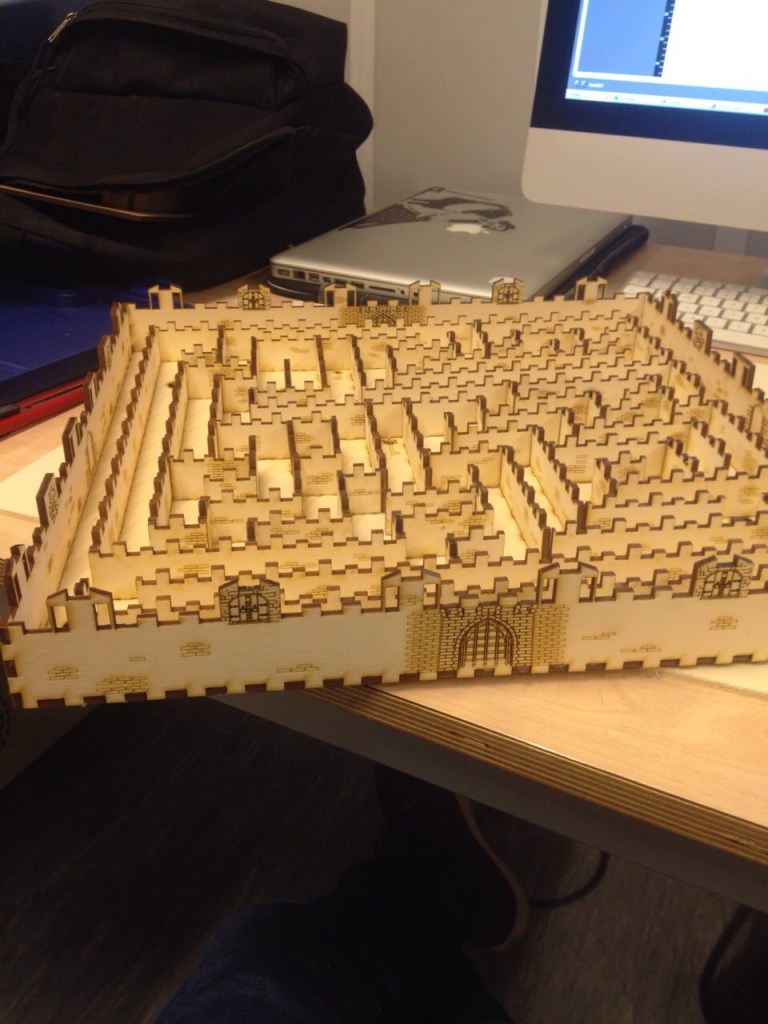
The 2.0 game was now built in a castle theme with multiple levels.
For each level you had to find the key icon on the board which would trigger timers and open the doors.
Level 1: After the key is triggered, the first door stays open until the game is reset.
Level 2: Both key need to be triggered, the door stays open for 15 seconds and closes automatically.
Level 3: Both keys need to be triggered, the door stays open for 4 seconds and closes automatically.
Level 4: Both keys need to be triggered, the door stays open for 3 seconds and closes automatically.
Level 5: One key needs to be triggered, the door stays open for 3 seconds and closes automatically.
Level 6: All 3 keys need to be triggered within 6 seconds to open the door, the door stays open for 4 seconds and closes automatically.
How does it work?
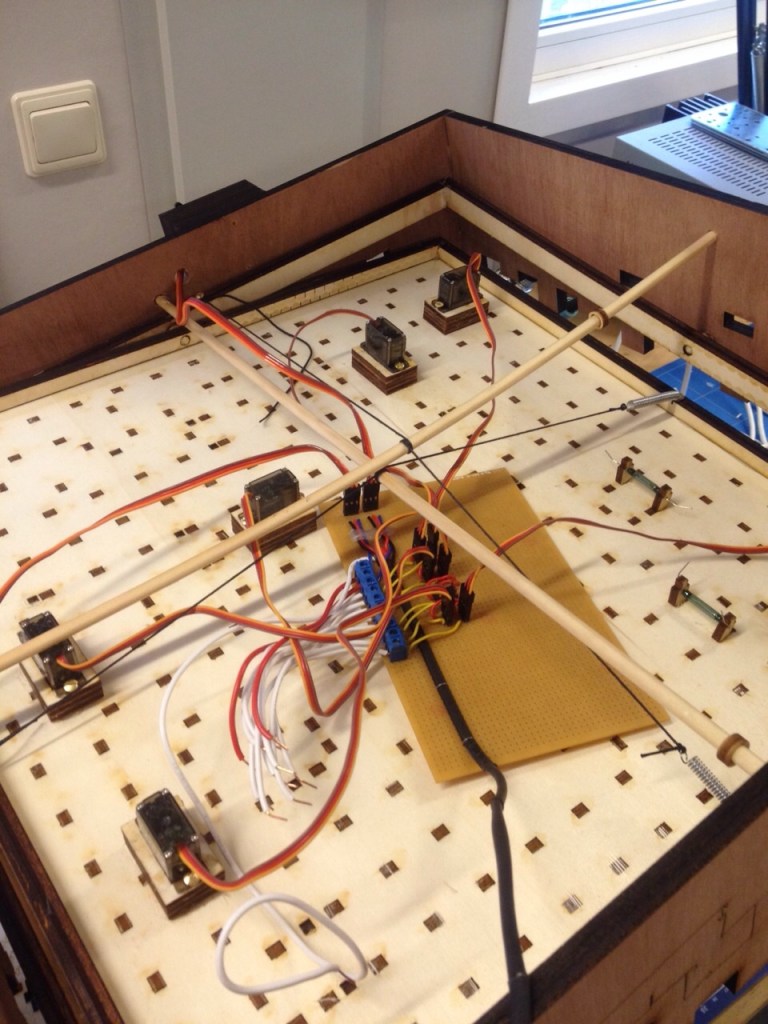
The game is programmed using an Arduino Mega 2560.
I programmed a Playstation controller to control two stepper motors, which in there turn power the X and Y-axels of the board.
The ball is actually a round magnet and underneath all the keys are reed switches (magnetically operated switches)
The doors are controlled by small servo SG90 motors.
How is it made?
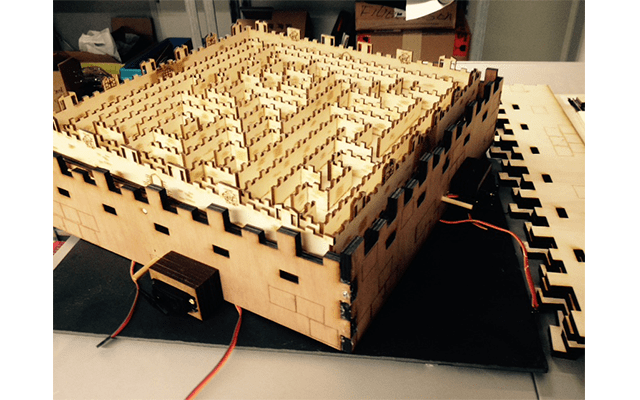
Fist I’ve designed the layout of the castle and walls in Adobe Illustrator and using a laser cutting machine cut all the pieces out of 3mm plywood. The outer walls (frame) was cut out off 9mm plywood.
All sensors and motor brackets were custom made to fit. Especially the height of the reed switches turned out to be sensitive, too close to the board and the magnet would stick and to far away and the sensor wouldn’t get triggered.
 Jai Boekhout